Food packaging has evolved far beyond its traditional role of simply protecting food during storage and transportation. Today, packaging is a vital part of the food industry that influences freshness, convenience, sustainability, safety, and even consumer purchasing decisions. As lifestyles become faster and technology continues to advance, innovative food packaging is transforming the way people prepare, store, transport, and consume meals.
From vacuum-sealed ready-to-eat meals to eco-friendly packaging materials and smart labels that monitor freshness, modern food packaging is helping reduce food waste while making nutritious food more accessible. Consumers today expect food that stays fresh longer, is easy to carry, and is safe to consume. Packaging innovations are meeting these expectations while also addressing global concerns such as environmental sustainability and food security.
The Evolution of Food Packaging
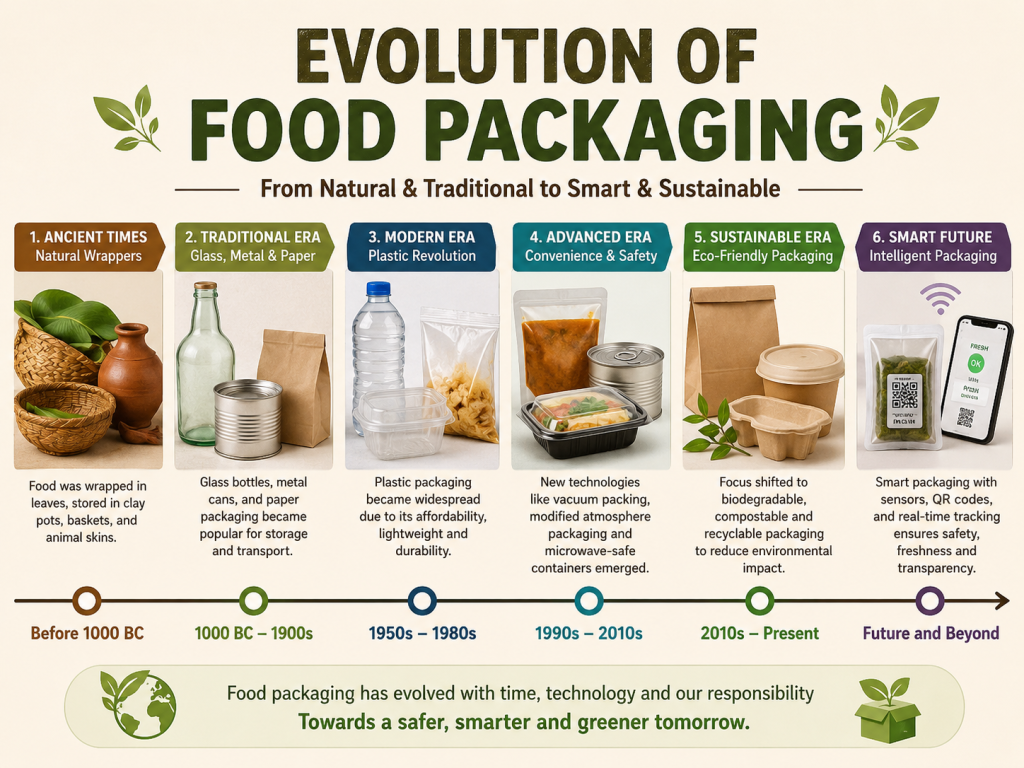
Food packaging has come a long way over the years. Earlier, people stored food in clay pots, wooden containers, leaves, and cloth bags. While these methods worked for short-term storage, they offered limited protection against moisture, bacteria, and spoilage.
The industrial revolution introduced metal cans, glass jars, and paper packaging, making food transportation much easier. Later, plastic packaging became popular because it was lightweight, durable, and cost-effective.
Today, advanced packaging technologies provide better protection, longer shelf life, and greater convenience. Modern packaging is designed not only to preserve food but also to improve customer experience and support sustainable practices.
From Traditional Storage to Smart Packaging
The transition from traditional storage methods to modern packaging has transformed the food industry. Smart packaging now includes QR codes, freshness indicators, and temperature-sensitive labels that provide valuable information about the product’s condition.
Packaging as a Marketing Tool
Packaging is also an important branding element. Attractive designs, nutritional information, and clear labeling help consumers make informed purchasing decisions while creating trust in the brand.
How Modern Packaging Improves Food Safety
Food safety remains one of the biggest priorities in the food industry. Proper packaging prevents contamination from bacteria, dust, moisture, oxygen, and harmful microorganisms.
Advanced packaging technologies ensure that food remains hygienic from the manufacturing unit to the consumer’s dining table.
Vacuum Packaging for Extended Freshness
Vacuum packaging removes air from the package before sealing it. Since oxygen promotes bacterial growth and oxidation, removing it helps preserve food quality for a much longer period. This technology is widely used for ready-to-eat meals, vegetables, fruits, dairy products, and snacks.
Tamper-Proof and Leak-Proof Packaging
Tamper-evident seals and leak-proof containers give customers confidence that the food has not been opened or contaminated before purchase. These features have become essential in packaged food products.
Convenience Is Driving Packaging Innovation
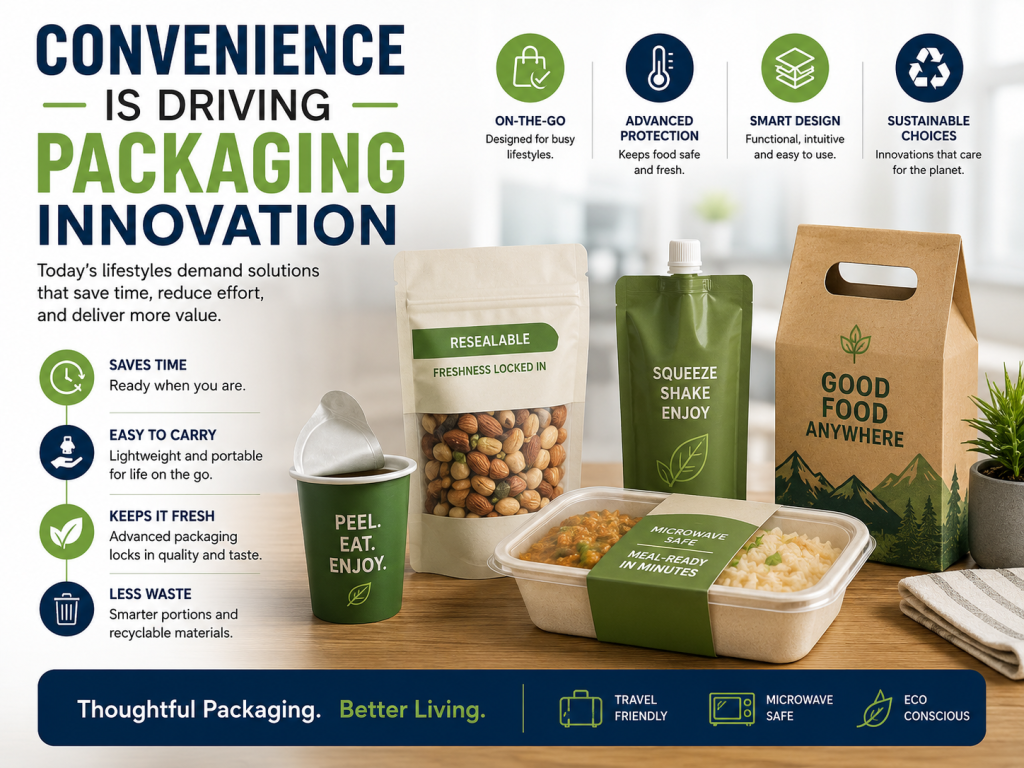
Modern consumers value convenience more than ever. Busy professionals, students, travelers, and families prefer food that requires minimal preparation while maintaining freshness and quality.
Packaging innovations have made ready-to-eat and ready-to-cook meals easier to transport, store, and consume.
Ready-to-Eat and Travel-Friendly Meals
Vacuum-packed meals and microwave-safe containers allow consumers to enjoy homemade-style food almost anywhere. Whether traveling internationally or working long hours, people can carry meals without worrying about spoilage.
Portion-Controlled Packaging
Single-serving packages help reduce food waste while allowing consumers to eat the right quantity. Portion-controlled packaging is particularly useful for fitness enthusiasts, office workers, and school lunches.
Sustainable Packaging Is the Future
Environmental concerns have encouraged food manufacturers to develop eco-friendly packaging solutions that reduce plastic waste and lower carbon emissions.
Consumers increasingly prefer brands that prioritize sustainability while maintaining product quality.
Eco-Friendly Packaging Materials
Many companies now use biodegradable materials, recyclable paper, compostable packaging, and plant-based plastics. These alternatives reduce environmental impact without compromising food safety.
Reducing Food Waste Through Better Packaging
One of the biggest environmental benefits of modern packaging is reducing food waste. Improved sealing technologies and moisture barriers help food stay fresh for longer, preventing unnecessary disposal of edible products.
Longer shelf life also reduces losses during transportation and storage, benefiting both businesses and consumers.
The Future of Smart Food Packaging
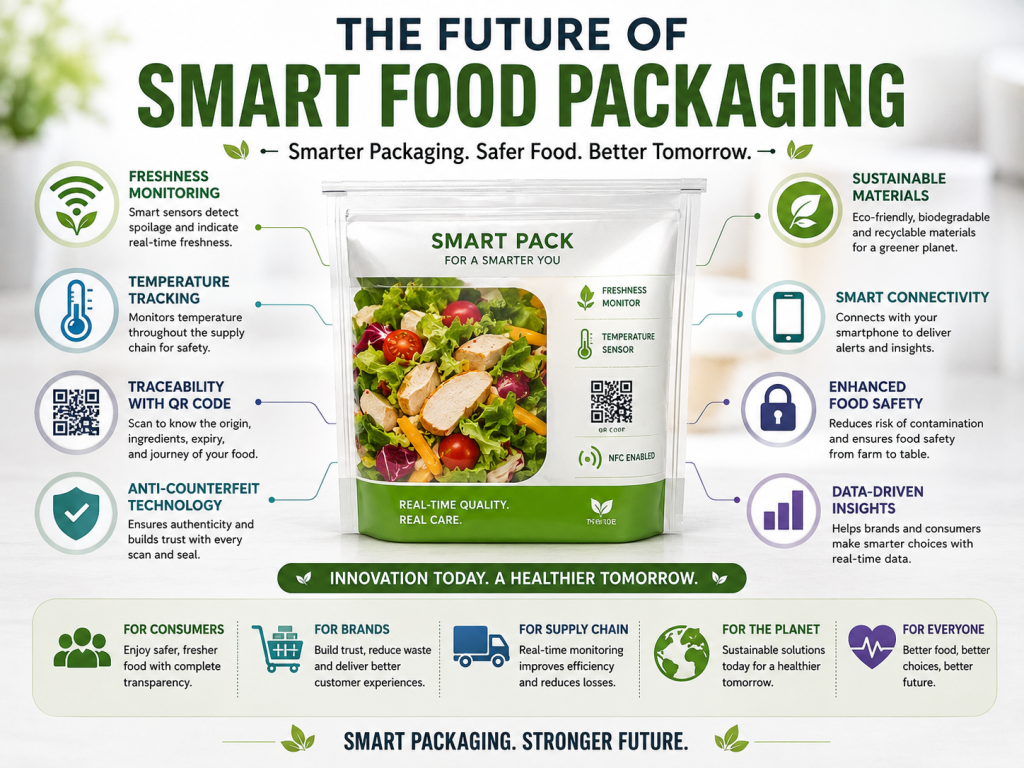
Technology is making food packaging more intelligent than ever before. Smart packaging combines digital technology with food preservation to improve transparency, safety, and consumer engagement.
As artificial intelligence, IoT, and digital tracking become more common, food packaging will continue to evolve.
Intelligent Labels and Freshness Indicators
Some advanced packages contain sensors that monitor temperature, humidity, or freshness. These indicators help consumers determine whether food is still safe to consume.
QR Codes and Digital Product Information
Modern packaging often includes QR codes that allow customers to access nutritional facts, ingredient lists, manufacturing dates, storage instructions, recipes, and product traceability by simply scanning with a smartphone.
In the future, consumers may even receive personalized dietary recommendations based on packaged food information.
The Role of Packaging in Global Food Distribution
Food packaging plays a crucial role in transporting food across cities, countries, and continents. With globalization increasing the demand for international food products, packaging ensures that food reaches consumers in excellent condition despite long transit times.
Modern packaging protects food from physical damage, temperature fluctuations, moisture, and contamination during shipping. Technologies such as vacuum sealing and modified atmosphere packaging (MAP) help maintain freshness, making it possible for consumers to enjoy foods from around the world without compromising quality.
Supporting International Trade
Strong and reliable packaging enables food manufacturers to export products safely while complying with international food safety standards. It reduces spoilage and helps maintain product consistency throughout the supply chain.
Better Logistics and Storage
Efficient packaging allows products to be stacked, stored, and transported more effectively, reducing handling costs and minimizing product damage.
Consumer Preferences Are Shaping Packaging Innovation
Today’s consumers are more informed than ever. They seek packaging that is convenient, environmentally friendly, informative, and visually appealing. As a result, food manufacturers are constantly improving packaging designs to meet changing customer expectations.
Easy-to-open packs, resealable pouches, transparent windows, and clear nutritional labels have become important factors influencing purchasing decisions.
Demand for Convenience
Consumers appreciate packaging that saves time, simplifies storage, and makes food preparation easier, especially for busy professionals, students, and families.
Transparency Builds Trust
Clear ingredient lists, nutritional information, allergen warnings, and manufacturing details help consumers make informed choices and build confidence in food brands.
Technology Is Revolutionizing Food Packaging
The future of food packaging is becoming increasingly digital. Advanced technologies are helping manufacturers improve food quality, monitor freshness, and provide greater transparency throughout the supply chain.
Innovations such as artificial intelligence (AI), the Internet of Things (IoT), and blockchain are making food packaging smarter and more efficient.
AI and Smart Monitoring
AI-powered systems can analyze packaging conditions, detect defects, and improve quality control during manufacturing, ensuring safer products for consumers.
Blockchain for Food Traceability
Blockchain technology allows every stage of a food product’s journey—from farm to table—to be securely recorded, improving transparency, authenticity, and food safety.
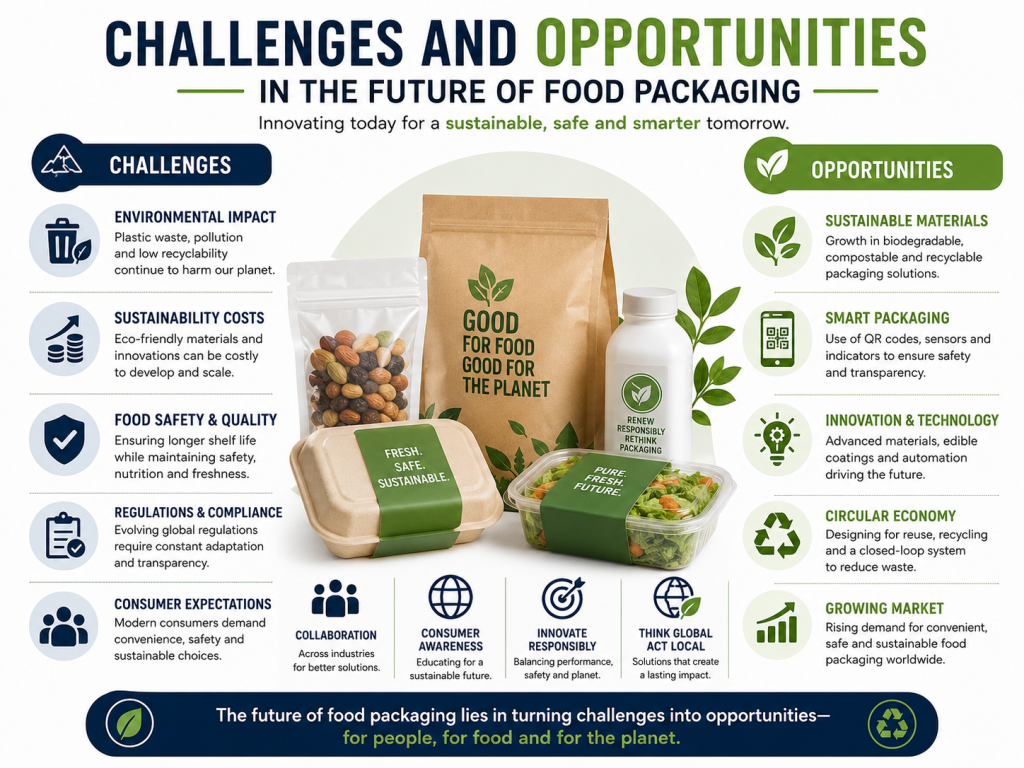
Challenges and Opportunities in the Future of Food Packaging
Although food packaging continues to evolve rapidly, manufacturers still face challenges such as reducing plastic waste, controlling production costs, and meeting strict environmental regulations. At the same time, these challenges create opportunities for innovation.
Companies investing in sustainable materials, recyclable packaging, and advanced preservation technologies are likely to gain a competitive advantage while contributing to a greener future.
Balancing Sustainability and Performance
The biggest challenge is creating packaging that is environmentally friendly while still providing excellent protection, durability, and long shelf life.
Future Opportunities for Businesses
Businesses that adopt eco-friendly packaging, smart technologies, and customer-focused designs can improve brand reputation, increase customer loyalty, and expand into global markets.
Conclusion
Food packaging is no longer just a protective covering—it has become an essential part of the modern food ecosystem. From extending shelf life and improving food safety to enhancing convenience and promoting sustainability, packaging innovations are changing how people buy, store, transport, and enjoy food.
As technology continues to advance, smart packaging, eco-friendly materials, and vacuum-sealing solutions will play an even greater role in reducing food waste and ensuring food reaches consumers in the best possible condition. Businesses that embrace these innovations will not only improve customer satisfaction but also contribute to a more sustainable and efficient food industry.
The future of food is closely connected with the future of packaging, making it one of the most exciting areas of innovation in the global food market.