
Moving abroad for higher education is an exciting milestone, but it also comes with many challenges—one of the biggest being food. For many Indian students, adjusting to a new country’s cuisine can be difficult. While international cities often have Indian restaurants and grocery stores, they may not always be nearby, affordable, or offer the authentic homemade taste students miss.
Packing Indian food before leaving India is a practical way to ensure you always have comforting, nutritious, and familiar meals during your initial months abroad. Whether you’re heading to the USA, Canada, the UK, Australia, Germany, or any other country, carrying ready-to-eat meals, vacuum-packed foods, and healthy snacks can help you save time, reduce expenses, and avoid the stress of cooking every day.
This guide covers the best Indian foods to pack, how to pack them safely, and useful tips to help international students enjoy delicious Indian meals wherever they are.
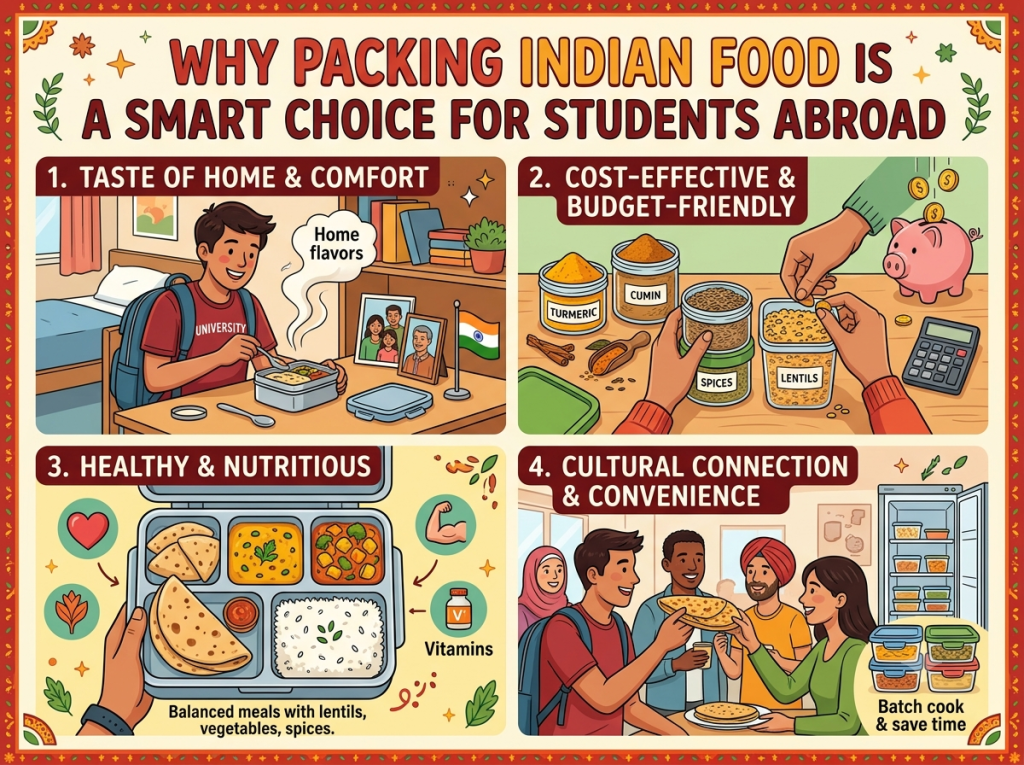
Why Packing Indian Food Is a Smart Choice for Students Abroad
Moving to a new country often means adapting to a completely different lifestyle. Between attending lectures, managing assignments, working part-time jobs, and handling household chores, finding time to cook nutritious ready to eat meals can become challenging.
Packing Indian food ensures that students always have access to familiar meals that are convenient, affordable, and satisfying.
Common Challenges of Finding Authentic Indian Food Overseas
Although Indian grocery stores are becoming more common worldwide, they may not always be easily accessible. Students often face challenges such as:
- High prices of Indian groceries
- Limited availability of regional dishes
- Long travel distances to Indian supermarkets
- Expensive restaurant meals
- Lack of homemade taste
For newly arrived students, having ready Indian meals can make the transition much easier.
How Ready-to-Eat Indian Meals Save Time and Money
Ready-to-eat Indian meals are especially useful because they:
- Require little or no cooking
- Save grocery shopping time
- Reduce food waste
- Cost less than ordering takeout regularly
- Provide balanced nutrition during busy schedules
Many vacuum-packed meals only need heating for a few minutes before serving.
Factors to Consider Before Packing Food for International Travel
Before filling your suitcase with food items, it’s important to understand what is permitted and how to pack everything correctly.
Check Airline and Customs Regulations
Every country has different import rules regarding food products.
Before packing:
- Read airline baggage guidelines.
- Check the customs regulations of your destination country.
- Prefer commercially packed and properly labeled food.
- Avoid carrying fresh fruits, vegetables, dairy products, or meat unless specifically allowed.
Following these rules helps avoid delays or confiscation during customs inspection.
Choose Lightweight, Travel-Friendly Packaging
Space and baggage weight are valuable when moving abroad.
Choose foods that are:
- Vacuum-packed
- Retort packaged
- Lightweight
- Compact
- Leak-proof
- Long shelf life
This allows you to carry more meals without exceeding baggage limits.
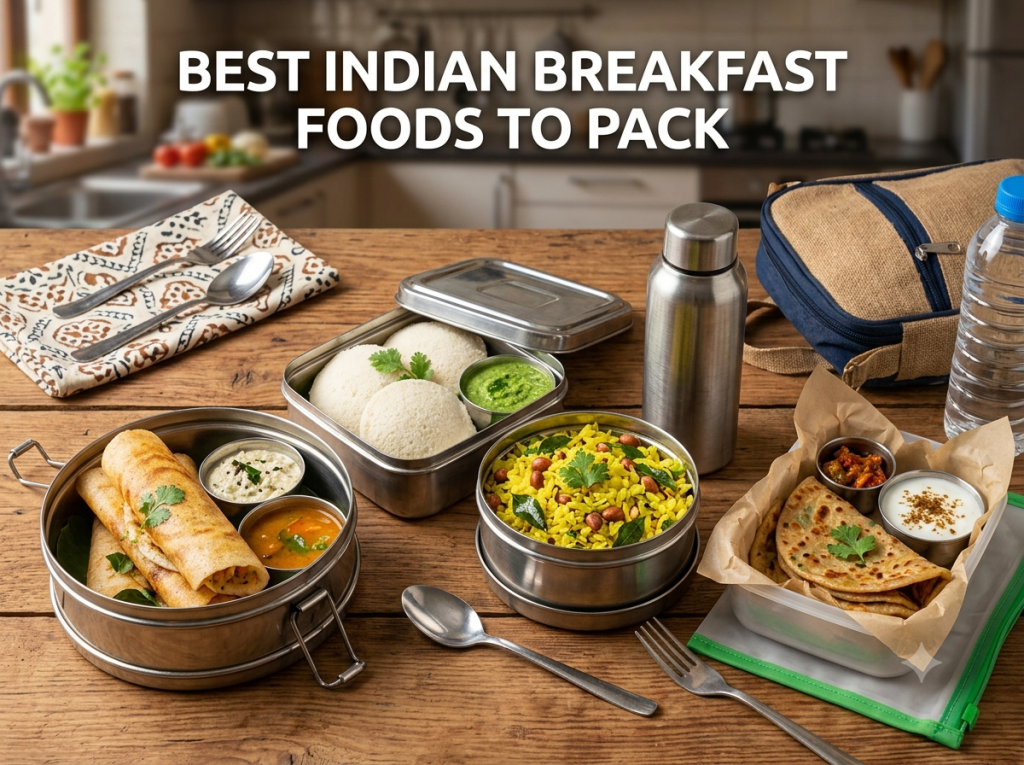
Best Indian Breakfast Foods to Pack
Breakfast is often skipped by busy students. Carrying easy-to-prepare breakfast options ensures a healthy start to the day.
Poha, Upma, and Instant Breakfast Mixes
Popular breakfast choices include:
- Instant Poha
- Ready Upma
- Vegetable Poha
- Rava Upma
- Instant Idli Mix
- Dosa Mix
- Pongal Mix
Most require only hot water or a few minutes of cooking.
These foods are:
- Light
- Nutritious
- Filling
- Easy to digest
Thepla, Khakhra, and Dry Snacks
Dry Indian snacks travel extremely well.
Popular options include:
- Methi Thepla
- Plain Thepla
- Khakhra
- Masala Khakhra
- Dry Bhakhri
- Roasted Chana
- Murmura Mix
They stay fresh for longer and are perfect for breakfast or evening snacks.
Best Ready-to-Eat Indian Lunch and Dinner Options
Lunch and dinner are where ready-to-eat meals become the biggest convenience.
Dal, Rice, Rajma, Chole, and Khichdi
Classic Indian comfort foods include:
- Dal Tadka
- Dal Makhani
- Rajma Masala
- Chole
- Jeera Rice
- Vegetable Pulao
- Khichdi
These meals are nutritious and contain a good balance of carbohydrates and protein.
Vacuum-packed versions remain fresh for extended periods without compromising taste.
Paneer Curry, Veg Biryani, and Mixed Vegetable Curry
Vegetarian students can also enjoy flavorful meals such as:
- Paneer Butter Masala
- Shahi Paneer
- Mixed Vegetable Curry
- Veg Korma
- Veg Biryani
- Vegetable Pulao
- Palak Paneer
Pair them with ready rotis or rice for a complete meal.
Healthy Snacks and Instant Foods for Daily Use
Snacking between classes or work shifts helps maintain energy throughout the day.
Roasted Namkeen, Dry Fruits, and Energy Snacks
Healthy snack options include:
- Roasted Chana
- Fox Nuts (Makhana)
- Mixed Dry Fruits
- Almonds
- Cashews
- Pistachios
- Energy Bars
- Protein Snacks
These require no preparation and provide lasting energy.
Instant Soups, Noodles, and Cup Meals
Quick meal options are ideal during exams or busy workdays.
Consider carrying:
- Instant Tomato Soup
- Vegetable Soup
- Cup Noodles
- Instant Pasta
- Ready Oats
- Cup Khichdi
- Instant Upma Cups
They are quick to prepare using only hot water.
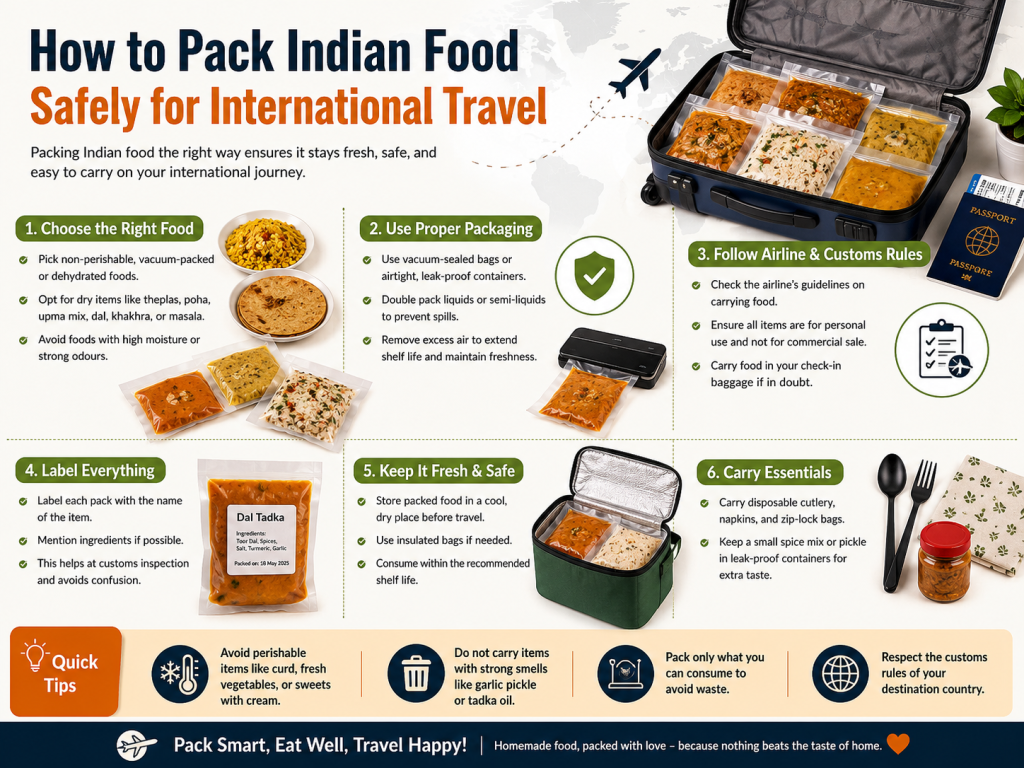
How to Pack Indian Food Safely for International Travel
Proper packing protects food quality and prevents leakage during travel.
Use Vacuum-Sealed and Leak-Proof Packaging
Vacuum packaging offers several advantages:
- Longer shelf life
- Reduced moisture
- Better freshness
- Space-saving
- Leak prevention
- Lower risk of contamination
It is one of the safest methods for transporting food internationally.
Organize Food by Meal Type and Duration of Stay
Separate food into categories such as:
Breakfast
- Poha
- Upma
- Thepla
Lunch
- Dal
- Rice
- Rajma
Dinner
- Paneer Curry
- Biryani
- Vegetable Curry
Snacks
- Khakhra
- Dry Fruits
- Roasted Namkeen
Organizing meals makes daily cooking easier and helps manage inventory.
Tips for Storing and Using Packed Indian Foods Abroad
Proper storage extends freshness and reduces waste.
Proper Storage After Arrival
Once you reach your destination:
- Store dry foods in a cool, dry place.
- Refrigerate opened ready-to-eat packs.
- Keep packaging sealed until use.
- Follow expiry dates.
- Avoid direct sunlight.
Proper storage maintains both taste and nutritional value.
Meal Planning to Make Your Food Last Longer
Planning your meals prevents unnecessary spending and food waste.
Suggestions include:
- Reserve ready meals for busy weekdays.
- Cook fresh meals on weekends.
- Rotate breakfast options.
- Finish opened packs first.
- Track expiry dates.
A simple meal plan helps your packed food last several weeks or even months.
Conclusion
Packing Indian food before moving abroad is one of the smartest decisions international students can make. It provides comfort during the adjustment period, saves money, reduces dependence on restaurants, and ensures access to nutritious meals even on the busiest days.
From breakfast items like poha and thepla to complete ready-to-eat meals such as dal, rajma, paneer curry, and vegetable biryani, there are plenty of convenient options available. Combining these with healthy snacks and proper storage practices allows students to enjoy familiar Indian flavors while focusing on their studies and new experiences abroad.
FAQs
1. What Indian foods are allowed on international flights?
Most commercially packed, sealed, and labeled vegetarian food items such as ready-to-eat meals, snacks, instant mixes, and vacuum-packed foods are generally allowed. However, always check the customs regulations of your destination country before traveling.
2. Can I carry ready-to-eat Indian meals in checked baggage?
Yes. Commercially packaged ready-to-eat meals are typically permitted in checked baggage. Ensure they are factory sealed, leak-proof, and packed securely to prevent damage during transit.
3. How long do vacuum-packed Indian meals stay fresh?
Depending on the packaging technology and storage conditions, vacuum-packed meals can remain fresh for several months. Always refer to the manufacturer’s expiry date and storage instructions.
4. What are the best vegetarian Indian foods for students abroad?
Popular options include Poha, Upma, Dal Tadka, Rajma, Chole, Khichdi, Veg Biryani, Paneer Curry, Mixed Vegetable Curry, Thepla, Khakhra, roasted snacks, and dry fruits.
5. Are homemade Indian foods allowed on international flights?
Some countries allow homemade dry foods, while others have strict restrictions. Fresh, liquid, dairy-based, or perishable homemade foods may not be permitted. Check your destination country’s customs guidelines before packing.
6. How should I store ready-to-eat meals after reaching my destination?
Store unopened packs in a cool, dry place away from direct sunlight. After opening, refrigerate any unused portion and consume it within the recommended time mentioned on the packaging.
7. Which Indian snacks are best for long-term storage?
Khakhra, roasted chana, makhana, dry fruits, peanuts, energy bars, roasted namkeen, and vacuum-packed snacks are excellent choices due to their long shelf life, portability, and convenience.