
Introduction
Vacuum-packed foods have become increasingly popular due to their convenience, extended shelf life, and ability to preserve freshness. From ready-to-eat meals and travel-friendly food packs to frozen products and pantry essentials, vacuum packaging is widely used by food manufacturers around the world. Despite its growing popularity, many people still have misconceptions about vacuum-packed foods.
These myths often discourage consumers from enjoying the benefits of properly packaged meals. In reality, vacuum packaging is a scientifically proven method of food preservation that helps maintain quality when combined with safe food processing and proper storage.
Let’s explore some of the most common myths about vacuum-packed foods and uncover the facts behind them.
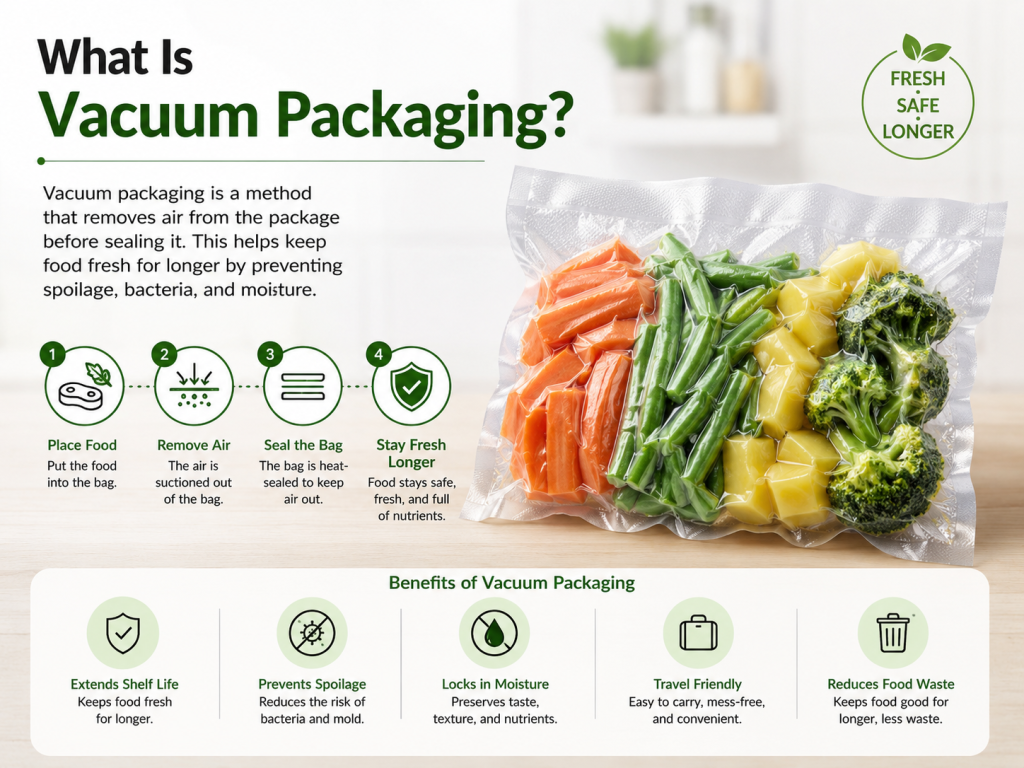
What Is Vacuum Packaging?
Vacuum packaging is a food preservation method in which most of the air is removed from the package before it is sealed. Removing oxygen helps slow oxidation and reduces the growth of many microorganisms that cause food spoilage.
Vacuum packaging does not replace proper cooking, hygienic manufacturing, or correct storage. Instead, it works together with these practices to help maintain food quality for a longer period.
Myth 1: Vacuum Sealing Makes Food Last Forever
While vacuum sealing dramatically extends the shelf life of food by reducing exposure to air, moisture, and contaminants, it does not make food immortal. Oxygen is a significant culprit in food spoilage, fostering the growth of aerobic bacteria and mold. By removing air, vacuum sealers slow down spoilage and freezer burn, but anaerobic bacteria (like Clostridium botulinum) can still thrive in low-oxygen environments if food is not stored properly.
For example, vacuum-sealed meats can last years in the freezer compared to months with standard packaging. However, all vacuum-sealed foods should still be subjected to safe handling and storage practices. Always refrigerate or freeze vacuum-sealed perishable foods and follow USDA guidelines on food safety.
Myth 2: Vacuum-Packed Foods Are Not Healthy
Many people assume that packaged food automatically means unhealthy food.
Fact
The nutritional value of a vacuum-packed meal depends on its ingredients, not the packaging method. A meal prepared with quality vegetables, grains, pulses, and balanced seasonings can remain nutritious after vacuum packaging. The packaging simply helps preserve the food’s freshness and quality.
Myth 3: All Vacuum Sealers Work the Same Way
There are various types of vacuum sealers, including external (edge) sealers and chamber sealers, each with distinct advantages. External sealers work best with solid foods and smaller quantities, while chamber vacuum sealers are ideal for liquids, soups, and bulk processing. The design differences affect performance and the types of bags and materials you can use safely and efficiently.
For example, chamber vacuum sealers can handle liquids without drawing them into the sealer. This makes them a versatile choice for a wide range of food preservation needs, offering superior performance and peace of mind for home cooks and culinary professionals alike.
Myth 4: Vacuum-Packed Foods Never Expire
Because vacuum-packed foods often have a longer shelf life, some people think they can be stored forever.
Fact
Every vacuum-packed product has a recommended “Best Before” or expiry date. Shelf life depends on factors such as ingredients, processing methods, storage temperature, and packaging quality. Always follow the manufacturer’s recommendations and check the expiry date before consumption.
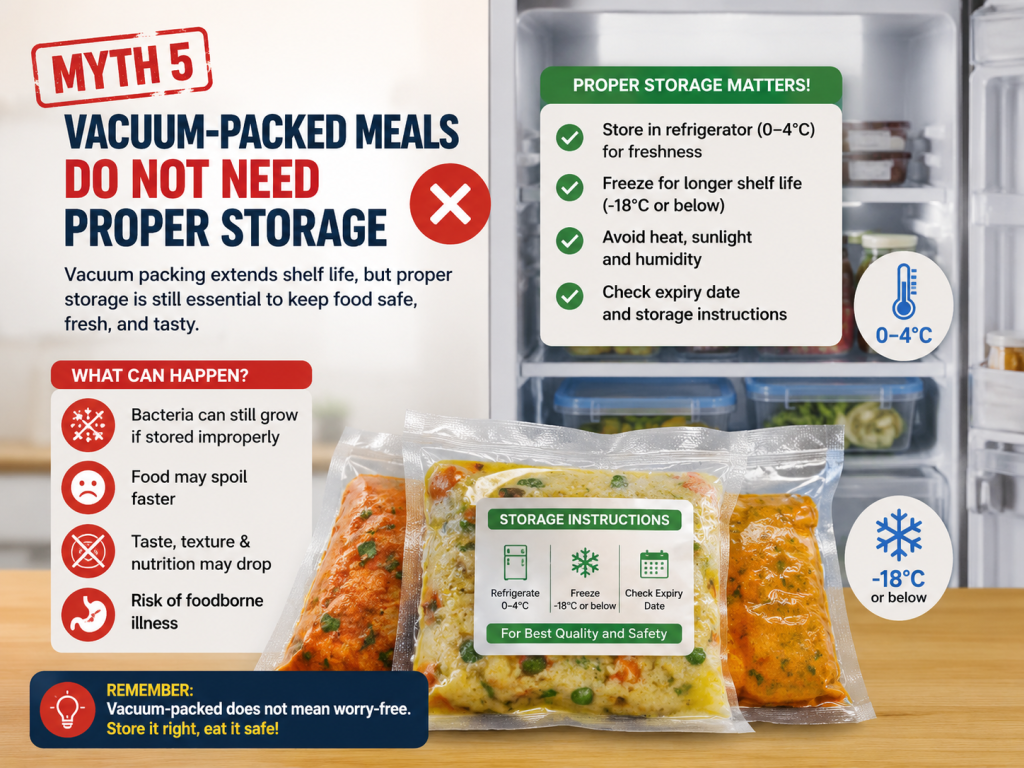
Myth 5: Vacuum-Packed Meals Do Not Need Proper Storage
Many people believe that vacuum-sealed meals can be stored anywhere.
Fact
Storage requirements vary by product. Some vacuum-packed foods are shelf-stable, while others require refrigeration or freezing. Always read and follow the storage instructions on the package to maintain food safety and quality.
Myth 6: Swollen Packaging Is Normal
Some consumers assume that slight swelling in a vacuum package is harmless.
Fact
A swollen or bloated package may indicate gas production from spoilage or a damaged seal. If you notice bloating, leakage, broken seals, or unusual odors, do not consume the product. Choose only packages that are properly sealed and undamaged.
Myth 7: Vacuum Packaging Changes the Taste of Food
Another common belief is that vacuum packaging removes the natural flavor of meals.
Fact
Vacuum packaging is designed to preserve taste by protecting food from oxidation and moisture loss. When stored and heated correctly, vacuum-packed meals can retain much of their original flavor, aroma, and texture.
Myth 8: Vacuum-Packed Foods Are Only for Travelers
Many people associate vacuum-packed meals only with camping or international travel.
Fact
Vacuum-packed foods are suitable for a wide range of lifestyles. They are ideal for:
Busy professionals
College students
Families
Office lunches
Emergency food supplies
Outdoor activities
Daily meal planning
Long-distance travel
Their convenience makes them useful for many everyday situations.
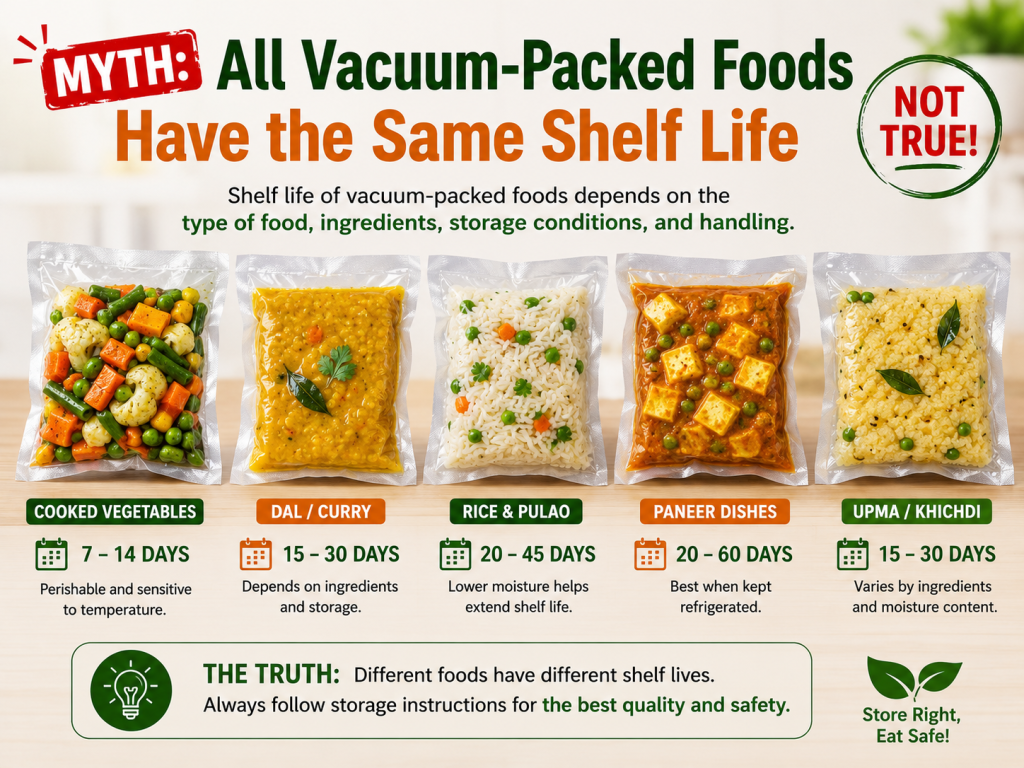
Myth 9: All Vacuum-Packed Foods Have the Same Shelf Life
Consumers sometimes assume that every vacuum-packed product lasts for the same amount of time.
Fact
Shelf life varies depending on the type of food, processing method, ingredients, and storage conditions. Always rely on the manufacturer’s instructions instead of assuming all products have identical storage periods.
Myth 10: Vacuum Packaging Reduces Nutritional Value
Some people believe that removing air also removes nutrients.
Fact
Vacuum packaging itself does not remove nutrients from food. Its main purpose is to protect the food from exposure to oxygen, which can help preserve quality over time. The nutritional value depends largely on the ingredients, processing methods, and storage conditions.
Conclusion
Vacuum-packed foods are often misunderstood because of common myths and misinformation. In reality, vacuum packaging is a reliable food preservation method that helps maintain freshness, quality, and convenience when combined with proper manufacturing and storage practices.
By understanding the facts behind these myths, consumers can make informed decisions and confidently enjoy vacuum-packed meals as part of a balanced lifestyle. Always choose products from trusted brands, follow storage instructions, and check packaging before use to ensure every meal is safe, fresh, and delicious.
FAQs
1. What is vacuum-packed food?
Vacuum-packed food is food sealed in airtight packaging after removing most of the air. This process helps preserve freshness, extend shelf life, and reduce the risk of spoilage when stored correctly.
2. Does vacuum packaging make food last forever?
No. Vacuum packaging extends the shelf life of food but does not make it last indefinitely. Foods still have an expiry date and should be stored according to the manufacturer’s instructions.
3. Is vacuum-packed food free from bacteria?
No. Vacuum packaging slows the growth of many bacteria by removing oxygen, but it does not eliminate all microorganisms. Proper cooking, refrigeration, and safe handling are still essential.
4. Does vacuum-packed food lose its nutritional value?
No. Vacuum packaging helps preserve nutrients by reducing exposure to air and moisture. Most vitamins, minerals, and proteins remain largely intact when the food is stored properly.
5. Can vacuum-packed food be stored at room temperature?
It depends on the product. Shelf-stable vacuum-packed foods can be stored at room temperature, while refrigerated or frozen vacuum-packed foods must be kept at the recommended temperature.