
Introduction
Packaged food has become an essential part of modern life. Whether you’re a busy professional, a student living away from home, or someone who enjoys the convenience of ready-to-eat meals, packaged foods offer a quick and reliable solution. However, not all packaged foods are created equal. Choosing the right product is important to ensure you’re getting safe, nutritious, and high-quality food.
Before adding a packaged food item to your shopping cart, it’s important to know what to look for. From checking the expiry date to reading nutrition labels, a few simple steps can help you make informed choices and protect your family’s health.
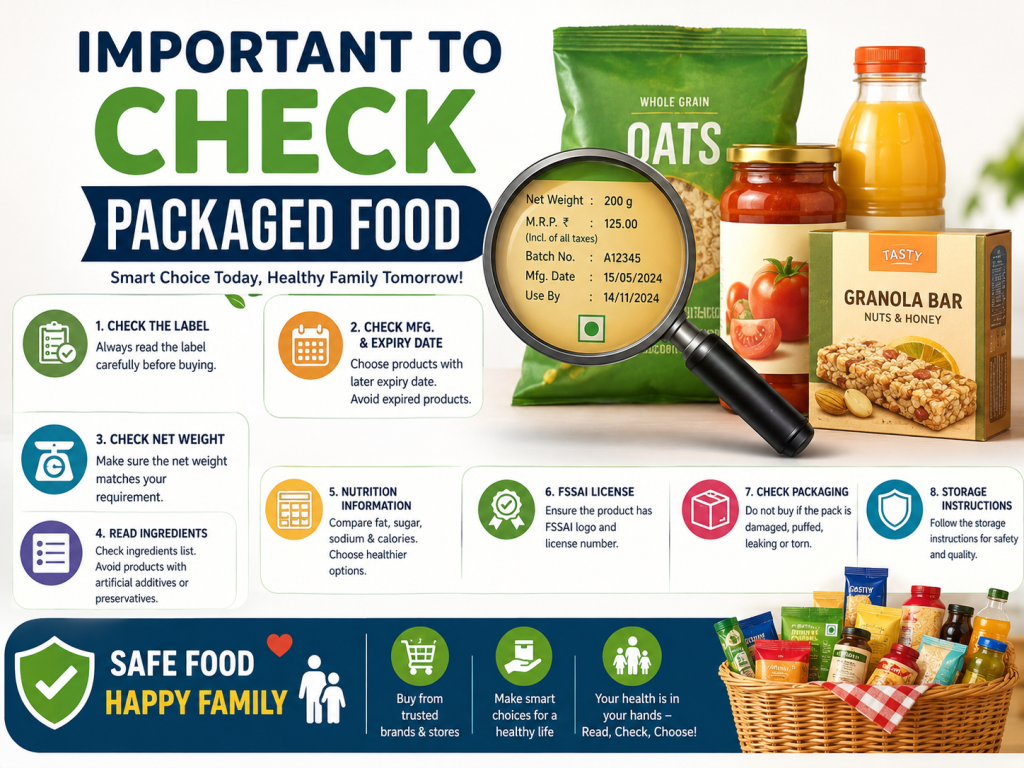
Why It Is Important to Check Packaged Food Before Buying
The quality of packaged food directly affects its taste, freshness, nutritional value, and safety. Food that is damaged, improperly stored, or past its expiry date can become unsafe to consume. By spending a few extra moments inspecting the product, you can avoid food waste, reduce health risks, and get better value for your money.
- Check the Manufacturing and Expiry Date
The first thing you should look for is the manufacturing date and the “Best Before” or expiry date. These dates indicate how long the product is expected to remain fresh and safe when stored correctly.
Always choose products with a longer remaining shelf life if you do not plan to consume them immediately. Avoid buying products that are close to their expiry date unless you intend to use them right away.
- Inspect the Packaging Carefully
The condition of the packaging is a good indicator of product quality. A damaged package may allow air, moisture, or bacteria to enter, affecting the food inside.
Avoid products with:
Torn or punctured packaging
Broken seals
Swollen or bloated packs
Leaking containers
Visible dents in cans (especially near the seams)
Properly sealed packaging helps maintain freshness and prevents contamination.
- Read the Ingredient List
Ingredients are listed in descending order by quantity. Reading the ingredient list gives you a better understanding of what you’re eating.
Choose products made with simple, recognizable ingredients whenever possible. If you have food allergies or dietary restrictions, carefully check for allergens such as milk, peanuts, soy, wheat, tree nuts, or gluten.
- Check the Nutrition Facts
The nutrition label provides valuable information about the food’s nutritional content. Pay attention to:
Calories per serving
Protein content
Dietary fiber
Total fat and saturated fat
Sugar content
Sodium levels
Vitamins and minerals
Comparing nutrition labels between similar products can help you make healthier choices.
- Look for Food Safety Certifications
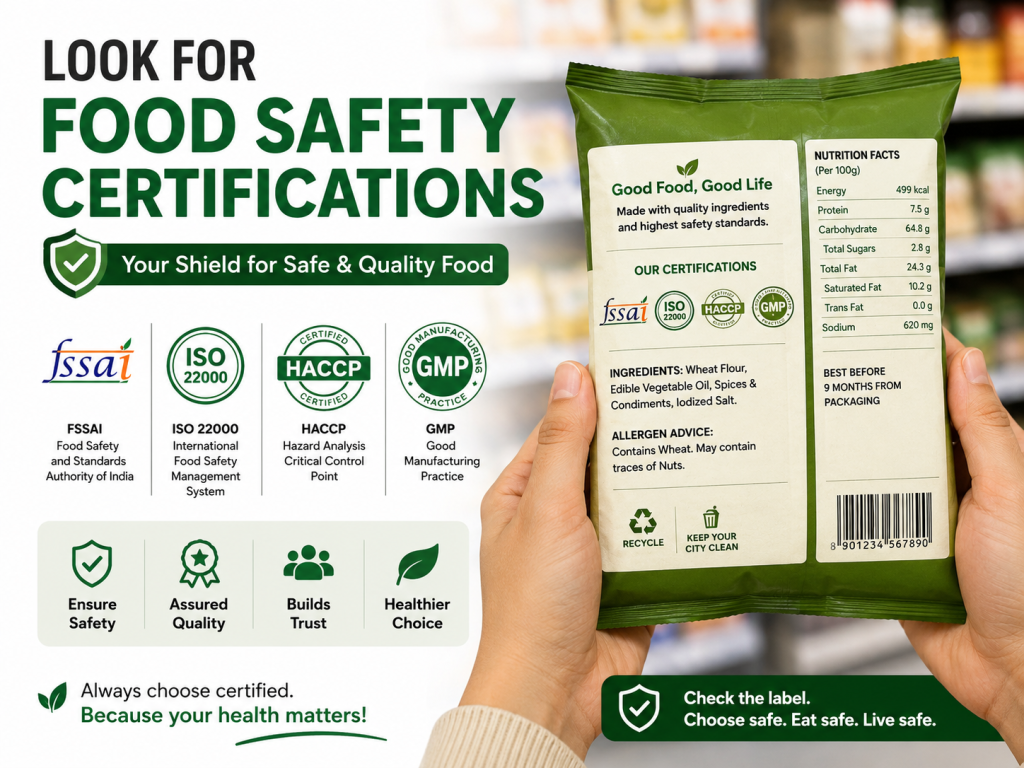
Food safety certifications indicate that the product has been manufactured according to established quality and hygiene standards.
In India, look for certifications such as:
FSSAI License Number
Vegetarian or Non-Vegetarian Symbol
AGMARK (where applicable)
ISI or other recognized quality certifications for relevant food products
These markings provide additional confidence in the product’s quality and compliance.
- Follow Storage Instructions
Every packaged food has recommended storage conditions. Some products require refrigeration, while others can be safely stored at room temperature.
Before purchasing, make sure you can store the product according to the manufacturer’s instructions. Improper storage after purchase can reduce freshness and increase the risk of spoilage.
- Check the Net Quantity
Always compare the net weight or volume of products instead of relying only on the package size. Sometimes larger-looking packages contain less product than expected.
Comparing unit prices (price per gram or kilogram) can also help you find the best value for money.
- Understand the Shelf Life
Shelf life tells you how long a product will remain safe and maintain its quality under recommended storage conditions.
Products such as vacuum-packed and ready-to-eat meals often have a longer shelf life due to advanced packaging methods. However, they should still be consumed within the recommended period for the best taste and quality.
- Check for Artificial Additives
Many packaged foods contain preservatives, artificial colors, flavors, or sweeteners. While approved additives are generally considered safe when used within regulatory limits, choosing products with fewer unnecessary additives may better suit people seeking a more natural diet.
Reading the ingredient label helps you understand what has been added to the product.
- Verify Brand Reputation
Purchasing from a trusted food brand can provide greater confidence in product quality, hygiene, and customer support.
Established companies typically follow strict manufacturing processes, quality control measures, and food safety regulations. Reading customer reviews and checking the brand’s reputation can also help you make an informed decision.
- Choose Packaging That Preserves Freshness
Modern food packaging technologies are designed to keep food fresh for longer.
Vacuum packaging, airtight sealing, and moisture-resistant packaging help protect food from air, moisture, and contaminants. These methods can extend shelf life while helping preserve flavor, texture, and nutritional quality when used correctly.
- Buy According to Your Needs
Avoid purchasing large quantities simply because they are on sale. Buy packaged foods that match your family’s consumption habits to reduce waste.
For frequent travelers, students, or office workers, individually packed ready-to-eat meals can be a practical option because they are convenient and easy to carry.
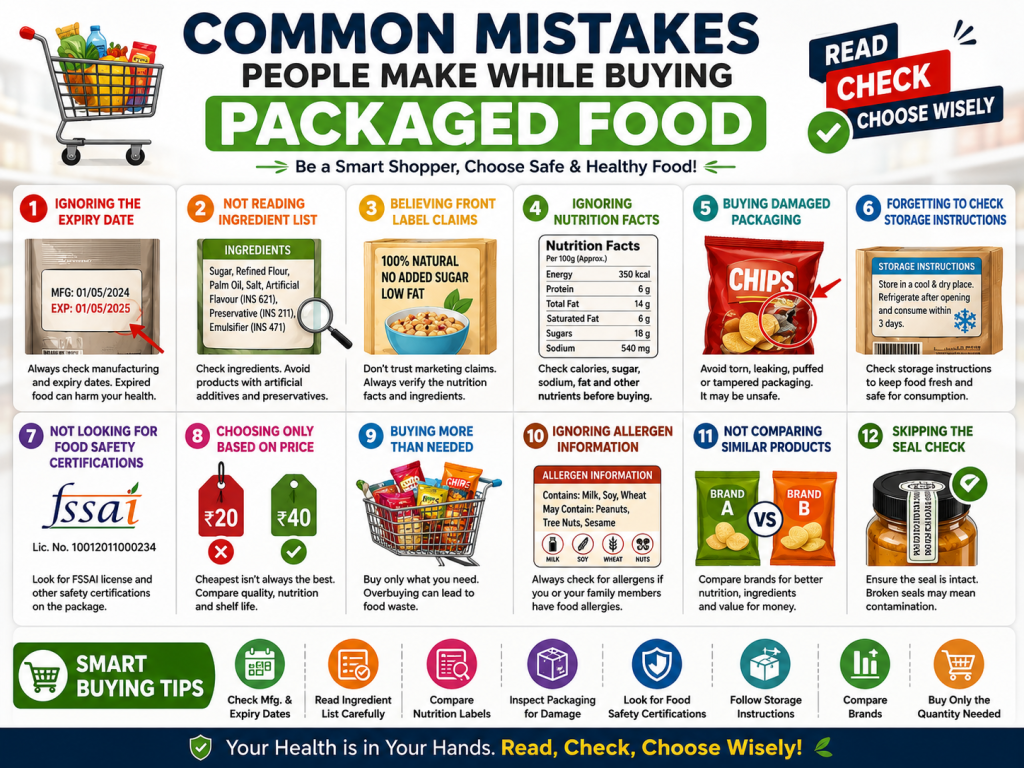
Common Mistakes that most people Avoid
Many shoppers unknowingly make mistakes while buying packaged foods. Try to avoid:
Ignoring expiry dates
Buying damaged packages
Not reading ingredient labels
Choosing products based only on attractive packaging
Forgetting to check storage instructions
Purchasing more than you can consume before the expiry date
Being mindful of these points can help you avoid unnecessary waste and ensure safer food choices.
Benefits of Choosing High-Quality Packaged Foods
When you select packaged foods carefully, you can enjoy several advantages:
Better food safety
Longer freshness
Reliable nutritional information
Convenient meal preparation
Reduced food waste
Consistent quality and taste
Easy storage and transportation
Conclusion
Buying packaged food is about more than convenience—it’s about making informed decisions for your health and your family’s well-being. By checking the manufacturing and expiry dates, inspecting the packaging, reading the ingredient list and nutrition facts, verifying food safety certifications, and following storage instructions, you can confidently choose products that are safe, fresh, and nutritious.
Whether you’re buying snacks, ready-to-eat meals, or vacuum-packed foods, a few extra moments spent reviewing the packaging can help ensure that every meal you bring home is both delicious and dependable.
FAQs
1. What should I check first before buying packaged food?
The first thing you should check is the manufacturing date, expiry date, and packaging condition. Ensure the package is sealed properly and has no signs of damage, leakage, or tampering.
2. Why is it important to read the ingredients list on packaged food?
Reading the ingredients list helps you understand what the product contains. It allows you to avoid allergens, excessive sugar, unhealthy fats, artificial preservatives, or ingredients that don’t fit your dietary preferences.
3. How can I tell if packaged food is safe to eat?
Check for an intact seal, a valid expiry date, proper food safety certifications (such as FSSAI in India), and storage instructions. Avoid buying products with swollen, torn, or damaged packaging.
4. What food labels should I pay attention to when buying packaged food?
Pay attention to the nutrition facts, ingredients list, allergen information, manufacturing and expiry dates, storage instructions, and food safety certifications. These details help you make healthier and safer purchasing decisions.
5. Why is checking the packaging condition important?
Damaged packaging can allow air, moisture, or harmful bacteria to enter the food, reducing its quality and safety. Always choose products with clean, properly sealed, and undamaged packaging to ensure freshness and hygiene.