
Introduction
Food safety is an essential part of maintaining good health and preventing foodborne illnesses. Every year, millions of people suffer from food poisoning caused by harmful bacteria, viruses, parasites, and improper food handling practices.
Whether you are preparing ready to eat meals at home, storing leftovers, or purchasing packaged foods, following proper food safety guidelines can help protect your family from health risks.
This guide covers the most important food safety tips that every family should know to ensure that food remains fresh, nutritious, and safe to consume.
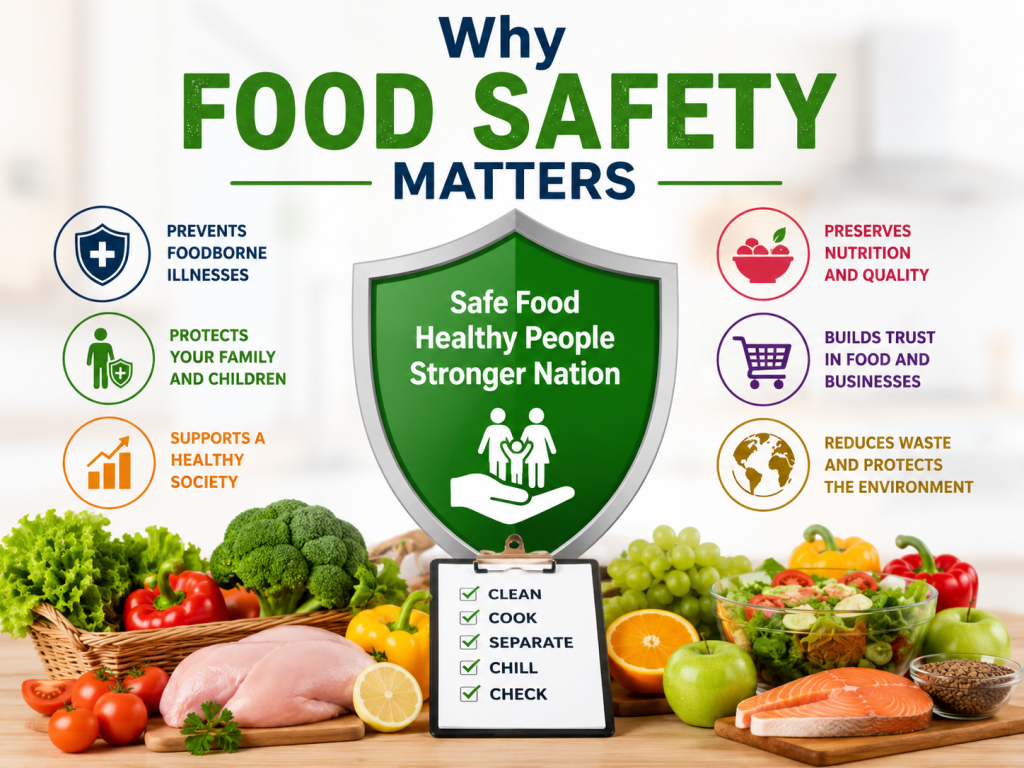
Why Food Safety Matters
Food safety is more than just keeping food clean. It involves proper handling, storage, cooking, and preservation methods that prevent contamination and the growth of harmful microorganisms. Unsafe food can lead to stomach infections, food poisoning, diarrhea, vomiting, and other serious health complications.
- Always Wash Your Hands Before Having Food
One of the simplest yet most effective food safety practices is proper handwashing. Our hands come into contact with numerous surfaces throughout the day, making them a common source of bacteria and germs.
Wash your hands thoroughly with soap and clean water for at least 20 seconds before preparing food, after handling raw meat, after using the restroom, and after touching pets or garbage. Clean hands help prevent harmful bacteria from transferring to food.
- Keep Kitchen Surfaces Clean
Kitchen countertops, cutting boards, utensils, and sinks can harbor bacteria if not cleaned regularly. Wipe surfaces with hot water and food-safe cleaning solutions before and after food preparation.
Pay special attention to areas where raw meat, poultry, or seafood are handled. Sanitizing kitchen surfaces reduces the risk of cross-contamination and keeps food preparation areas hygienic.
- Separate Raw and Cooked Foods
Cross-contamination occurs when bacteria from raw foods spread to cooked or ready-to-eat foods. This is one of the leading causes of foodborne illness.
Use separate cutting boards and utensils for raw meat and vegetables whenever possible. Store raw meat in sealed containers on the lower shelves of the refrigerator to prevent juices from dripping onto other foods.
- Cook Food Thoroughly
Proper cooking kills harmful bacteria and pathogens that may be present in food. Undercooked food can pose serious health risks, especially meat, poultry, seafood, and eggs.
Ensure foods are cooked evenly and reach the recommended internal temperature. Avoid consuming raw or partially cooked animal products unless they are specifically intended for safe consumption.
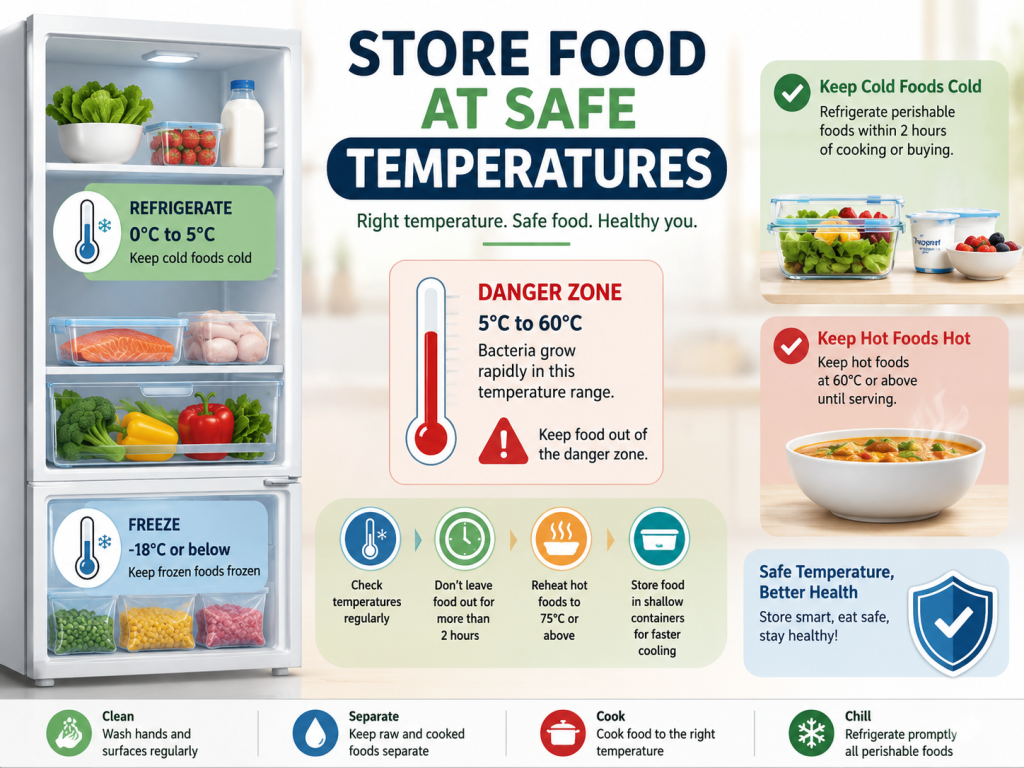
- Store Food at Safe Temperatures
Temperature plays a crucial role in food safety. Harmful bacteria multiply rapidly when food is kept in the temperature danger zone.
Refrigerate perishable foods promptly after purchase or preparation. Keep refrigerators cold and avoid leaving cooked food at room temperature for extended periods. Proper temperature control helps preserve freshness and prevents spoilage.
- Check Expiry Dates Regularly
Always inspect food packaging before consumption. Expiry dates provide important information about product quality and safety.
Avoid consuming products that are expired, damaged, swollen, leaking, or have unusual odors. Regularly check pantry and refrigerator items to ensure all foods are safe to eat.
- Wash Fruits and Vegetables Properly
Fresh fruits and vegetables may contain dirt, pesticides, and bacteria from handling and transportation. Rinse produce thoroughly under clean running water before eating, cutting, or cooking.
Even fruits with peels should be washed because contaminants on the outer surface can transfer to the edible portion during cutting.
- Use Safe Drinking Water
Water is a critical ingredient in food preparation. Contaminated water can introduce harmful microorganisms into meals.
Use clean, filtered, or properly treated water for cooking, drinking, washing produce, and preparing beverages. Safe water significantly reduces the risk of foodborne diseases.
- Store Leftovers Correctly
Leftovers should be cooled and stored in airtight containers as soon as possible. Proper storage helps maintain freshness and prevents bacterial growth.
Label containers with storage dates when necessary and consume leftovers within the recommended time frame. Reheat leftovers thoroughly before serving.
- Be Careful with Packaged and Ready-to-Eat Foods
Packaged foods, including vacuum-packed and ready-to-eat meals, offer convenience and longer shelf life. However, it is important to follow storage instructions provided by the manufacturer.
Check packaging integrity before use and ensure products are stored according to recommendations. Properly packaged foods can remain safe and fresh for longer periods when handled correctly.
- Avoid Refreezing Thawed Food
Once frozen food has been thawed, it should be cooked promptly. Repeated freezing and thawing can affect food quality and may increase the risk of bacterial growth.
If food has been thawed in the refrigerator and remains cold, it may sometimes be safely refrozen, but cooking before refreezing is generally the safer option.
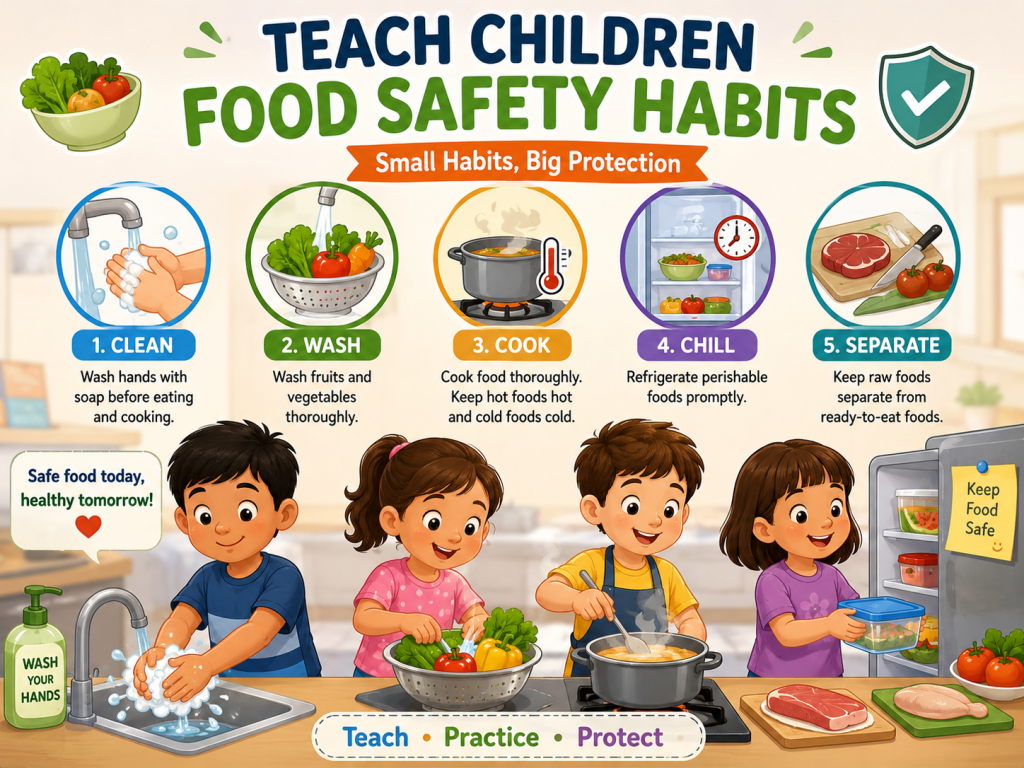
- Teach Children Food Safety Habits
Food safety is a family responsibility. Teaching children simple habits such as washing hands, cleaning fruits before eating, and avoiding food left out for long periods helps create lifelong healthy practices.
Encouraging safe food handling from a young age can reduce risks and promote better hygiene awareness.
Common Signs of Spoiled Food
Even when food appears safe, it is important to recognize warning signs of spoilage. Discard food if you notice:
Unpleasant or sour odors
Mold growth
Discoloration
Slimy texture
Swollen packaging
Unusual taste
When in doubt, it is always safer to throw food away rather than risk illness.
Conclusion
Food safety starts at home and requires attention at every stage—from purchasing and storing food to preparing and serving meals. Simple practices such as washing hands, keeping surfaces clean, cooking food thoroughly, and storing food properly can significantly reduce the risk of foodborne illnesses.
By following these essential food safety tips, families can enjoy healthier meals, reduce food waste, and create a safer kitchen environment. Making food safety a daily habit not only protects your loved ones but also ensures that every meal is both delicious and safe to eat.
FAQs
1.Why is food safety important for every family?
Food safety helps prevent foodborne illnesses caused by harmful bacteria, viruses, and parasites. Following safe food handling practices protects the health of children, adults, and elderly family members.
2.What are the four basic principles of food safety?
The four key principles are:
- Clean
- Separate
- Cook
- Chill