
Introduction
Healthy eating means eating a wide variety of foods from each of the 5 major food groups, in the amounts recommended. Eating a variety of foods from the 5 major food groups provides a range of nutrients to the body, promotes good health and can help reduce the risk of disease – as well as keeping your diet interesting with different flavours and textures.
Many of the foods that often feature regularly in modern diets do not form part of the 5 food groups. These foods, sometimes referred to as ‘junk’ foods, ‘discretionary choices’ or ‘occasional foods’ can be enjoyed sometimes, but should not feature regularly in a healthy diet. Fats and oils are high in kilojoules (energy) but necessary for a healthy diet in small amounts. No matter where you’re starting, it’s easy to make little changes to bring your eating closer in line with the Australian dietary guidelines One of the biggest challenges people face today is finding healthy food that fits into their busy schedules.
This is where ready-to-eat and vacuum-packed meals have become a convenient option. High-quality vacuum-packed foods retain their freshness and nutritional value while offering convenience for working professionals, students, travelers, and families. When prepared with wholesome ingredients and proper packaging methods, these meals can be a healthy alternative to processed fast food.
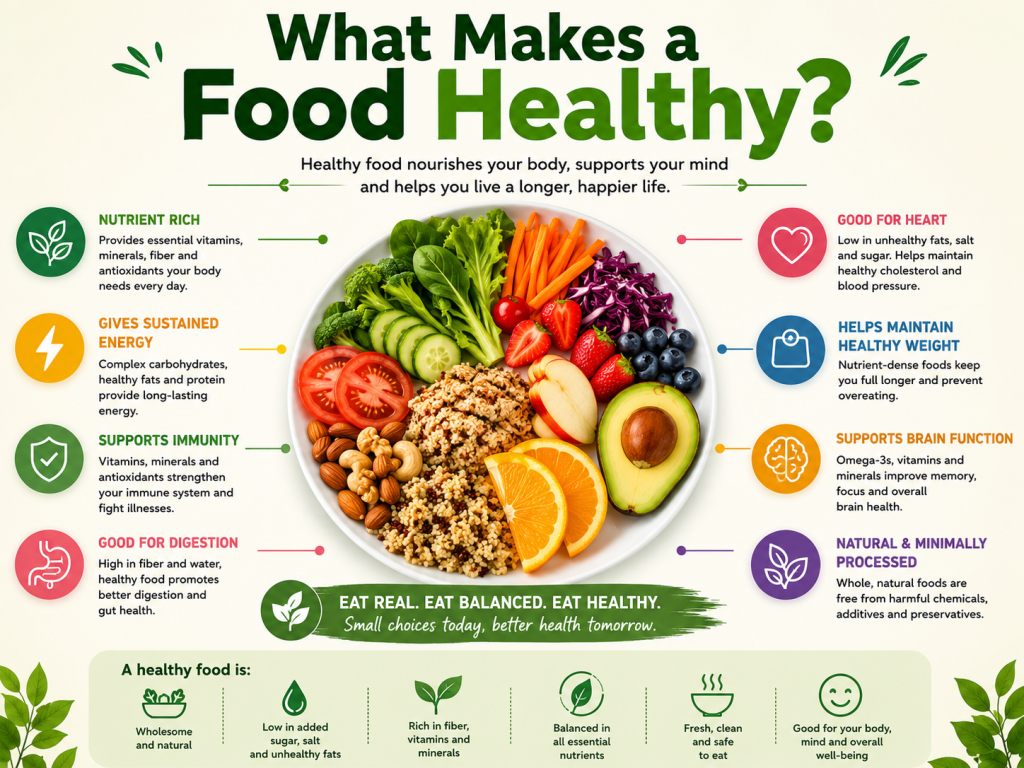
What makes a food healthy ?
When people ask what makes a food healthy, the answer is usually not one single feature. In general, a healthy food is one that supports the body with useful nutrients and fits well into an overall balanced eating pattern. It often contains vitamins, minerals, protein, fiber, and healthy fats, while being lower in excess added sugar, sodium, and heavily refined ingredients.
Healthfulness also depends on context. A food can be nutritious for one person and less suitable for another depending on age, activity level, medical conditions, allergies, cultural preferences, and personal goals. For example, an athlete, a child, and a person managing high blood pressure may all need somewhat different nutrition approaches.
Rather than separating foods into strictly “good” or “bad,” it is often more helpful to think in terms of frequency, portion, and overall pattern. Foods that are closer to their natural form—such as vegetables, fruits, legumes, nuts, seeds, fish, eggs, yogurt, and whole grains—often form the foundation of healthy eating. More processed items can still fit in moderation, but they are usually less nutrient-dense.
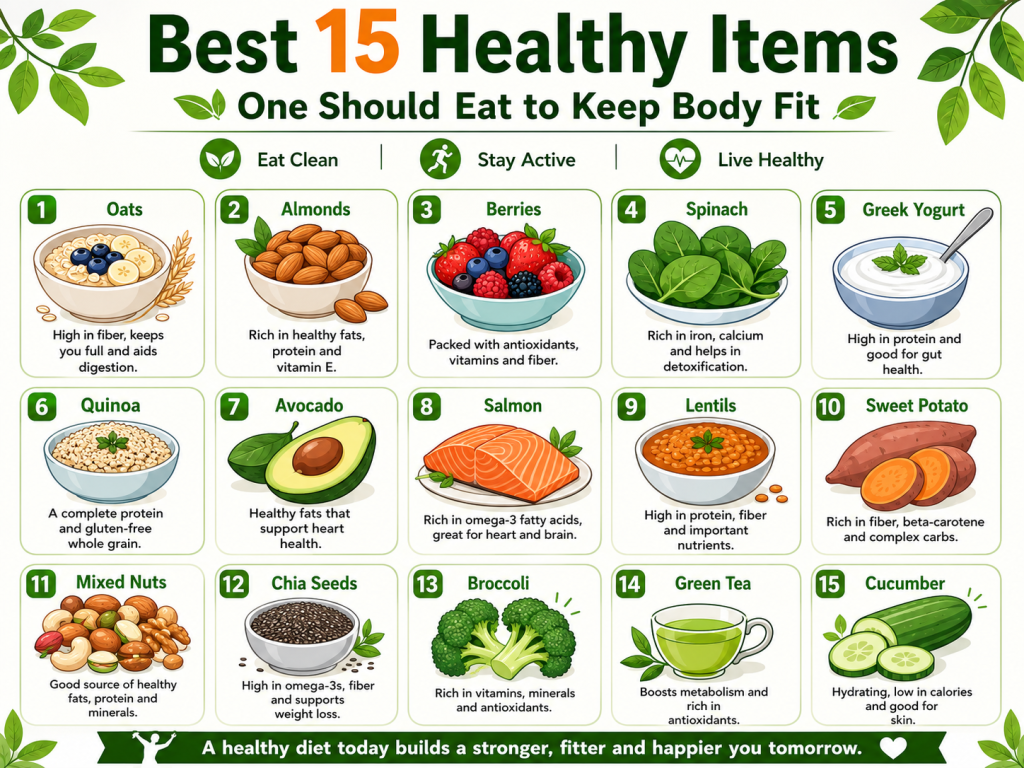
Best 15 healthy items one should eat to keep body fit :-
Oats
Oats are one of the healthiest whole grains available. They are rich in fiber, vitamins, minerals, and antioxidants. Oats help reduce cholesterol levels, improve digestion, and keep you feeling full for longer. They make an excellent breakfast option.
Greek Yogurt or Curd
Curd is packed with calcium, protein, and probiotics that promote gut health. It improves digestion, strengthens bones, and supports immunity. It can be enjoyed plain or with fruits and seeds.
Spinach
Spinach is a nutrient powerhouse rich in iron, calcium, vitamins A, C, and K. It supports healthy bones, improves immunity, and provides antioxidants that protect the body from damage.
Lentils (Dal)
Dal is an excellent source of plant-based protein, fiber, iron, and essential minerals. It supports muscle growth, improves digestion, and keeps blood sugar levels stable. It is a staple in many healthy Indian meals.
Brown Rice
Brown rice contains more fiber and nutrients than white rice. It provides long-lasting energy, supports digestion, and helps maintain healthy blood sugar levels.
Quinoa
Quinoa is a complete protein containing all nine essential amino acids. It is rich in fiber, magnesium, iron, and antioxidants, making it an ideal food for vegetarians and fitness enthusiasts.
Almonds
Almonds are loaded with healthy fats, protein, vitamin E, and magnesium. Eating a handful daily supports heart health, brain function, and healthy skin while providing sustained energy.
Walnuts
Walnuts are rich in omega-3 fatty acids that support brain function and heart health. They also contain antioxidants that help reduce inflammation.
Fresh Fruits
Fruits such as apples, oranges, bananas, berries, papaya, and guava are rich in vitamins, fiber, and antioxidants. They naturally satisfy sweet cravings while supporting overall health.
Broccoli
Broccoli contains vitamins C and K, fiber, and antioxidants. It strengthens immunity, supports digestion, and promotes healthy bones.
Sweet Potatoes
Sweet potatoes are rich in complex carbohydrates, fiber, vitamin A, and potassium. They provide steady energy and support eye health.
Paneer
Paneer provides high-quality protein and calcium, making it an excellent vegetarian food for muscle growth and bone strength. It is versatile and can be included in various healthy meals.
Mixed Seeds
Chia seeds, flaxseeds, pumpkin seeds, and sunflower seeds are packed with healthy fats, protein, fiber, and minerals. They support heart health, improve digestion, and provide essential nutrients.
Vegetable Khichdi
A wholesome vegetable khichdi made with rice, lentils, and vegetables offers a balanced combination of carbohydrates, protein, fiber, and vitamins. It is easy to digest and suitable for people of all ages. Vacuum-packed ready-to-eat khichdi can also be a convenient option for travelers and busy professionals when prepared with high-quality ingredients.
Conclusion
Healthy eating is a lifelong commitment that starts with making informed food choices. Incorporating nutrient-rich foods such as whole grains, fruits, vegetables, legumes, nuts, seeds, and dairy into your daily diet helps improve overall health, strengthen immunity, and reduce the risk of chronic diseases. For individuals with busy lifestyles, properly prepared ready-to-eat and vacuum-packed meals made from wholesome ingredients can provide both convenience and nutrition. By choosing balanced, minimally processed foods and maintaining healthy eating habits, you can enjoy better energy, improved well-being, and a healthier future.