
In today’s fast-paced world, vacuum packaging machines have revolutionized how we store, transport, and preserve food. With growing concerns about food waste and safety, businesses and households are turning to vacuum packaging equipment to extend shelf life and reduce spoilage.
Whether it’s for ready to eat meals or bulk storage in commercial kitchens, food vacuum packaging machines play a crucial role in modern food preservation Vacuum sealing is now a staple method in food processing, distribution, and storage.
From supermarket shelves to restaurant kitchens, vacuum sealer machines help keep products fresh by removing air—slowing oxidation, preventing moisture loss, and protecting against contamination.
As demand for longer-lasting, high-quality food grows, so does the reliance on chamber vacuum sealers, automatic vacuum packing machines, and other advanced sealing technologies..
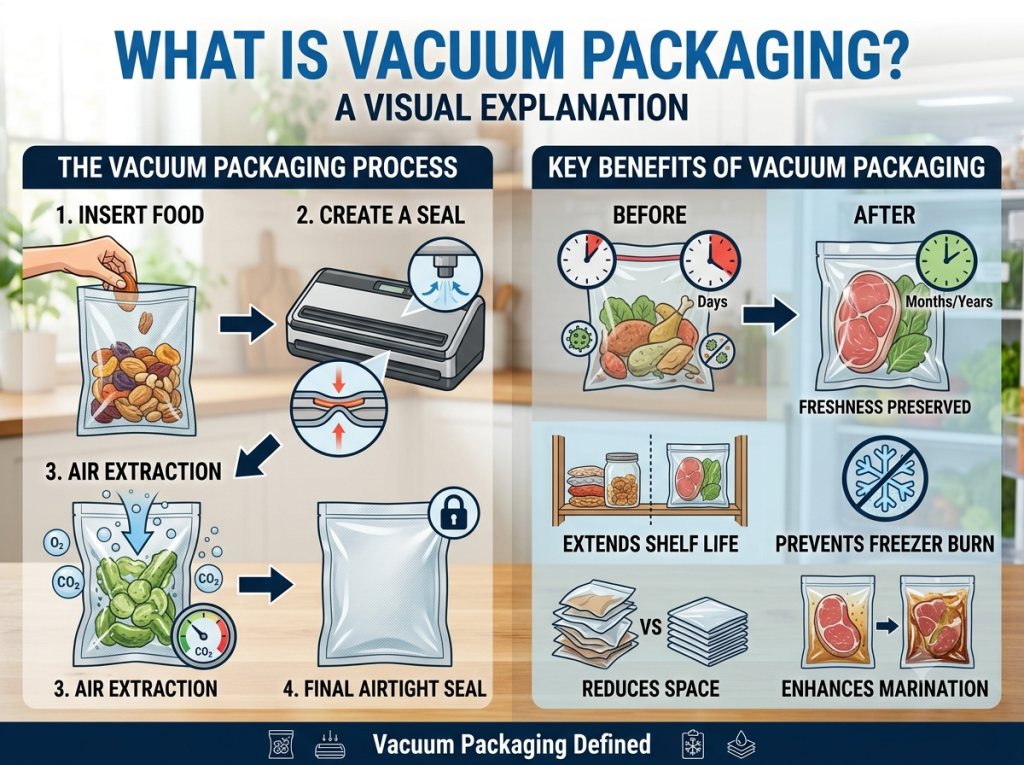
What is Vacuum Packaging?
Vacuum packaging is a method of packaging where air from the interior of a package is removed in its entirety immediately prior to sealing the package.
This involves placing food products in a plastic film package (or potentially a film package made with other polymer materials), removing air from inside the package with a vacuum pump, and then sealing the package (Church & Parsons, 1995).
The materials used for vacuum packaging must be strong enough to withstand the vacuum, flexible enough to form around the food product, and have a very specific level of heat sensitivity.
Regarding the heat sensitivity of the material, the material must be sealed during the packaging process, but also suitable for moderate temperatures during cooking (e.g., 75°C). This is especially the situation with the emerging popularity of sous vide cooking of foods.
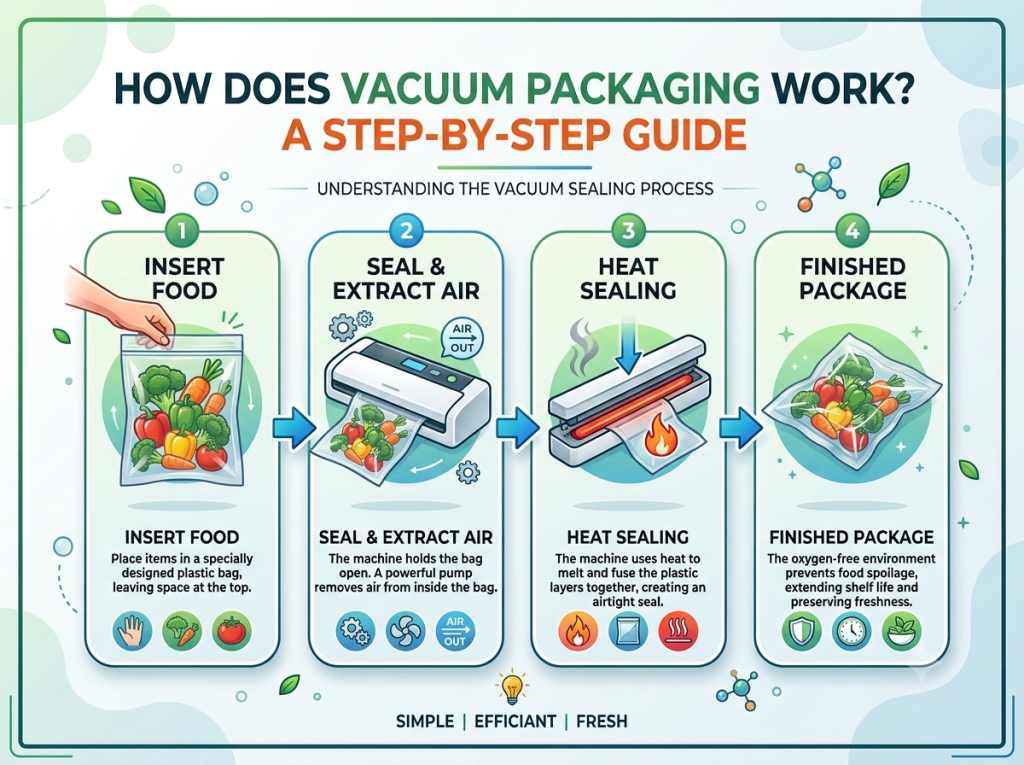
How Does Vacuum Packaging Work? A Step-by-Step
Vacuum packaging follows a simple yet highly effective process designed to preserve food quality and increase its self life .
- Food Preparation
Freshly cooked food is first cooled to the room temperature to maintain safety and quality before packaging. - Filling the Package
The food is carefully placed inside a specially designed food-grade vacuum pouch or container. - Air Removal
A vacuum sealing machine extracts nearly all the air from inside the package. Removing oxygen slows down oxidation and prevents many spoilage organisms from multiplying quickly. - Airtight Sealing
Once the air is removed, the machine immediately seals the package tightly, preventing outside air from entering. - Storage
The sealed food is stored according to its requirements. Some foods remain refrigerated, some are frozen, while specially processed ready-to-eat products may be safely stored at room temperature depending on the manufacturing process.
This controlled packaging method helps preserve freshness, flavor, texture, aroma, and nutritional value much longer than conventional packaging.
Shelf Life of Vacuum-Packed Foods
The amount of shelf life enhanced by a vacuum bag is dependent on the structure in the material. A standard vacuum bag is composed of a PA/PE structure where PA is for puncture resistance and PE is for sealing. The high barrier category includes the usage of more layers focused on the prevention of oxygen permeability, and therefore shelf life protection.
There are two materials used in high barrier structures, polyvinylidene chloride and ethylene vinyl alcohol. Shelf life indication can be effectively measured by how many cubic centimeters of oxygen can permeate through 1 square meter of material over a 24-hour period.
A standard PA/PE bag allows on average 100 cubic centimeters, PVDC allows on average over 10, and EVOH on average 1 cubic centimeter. Multi-layer structures allow the ability to use strong oxygen-barrier materials for enhanced shelf life protection.
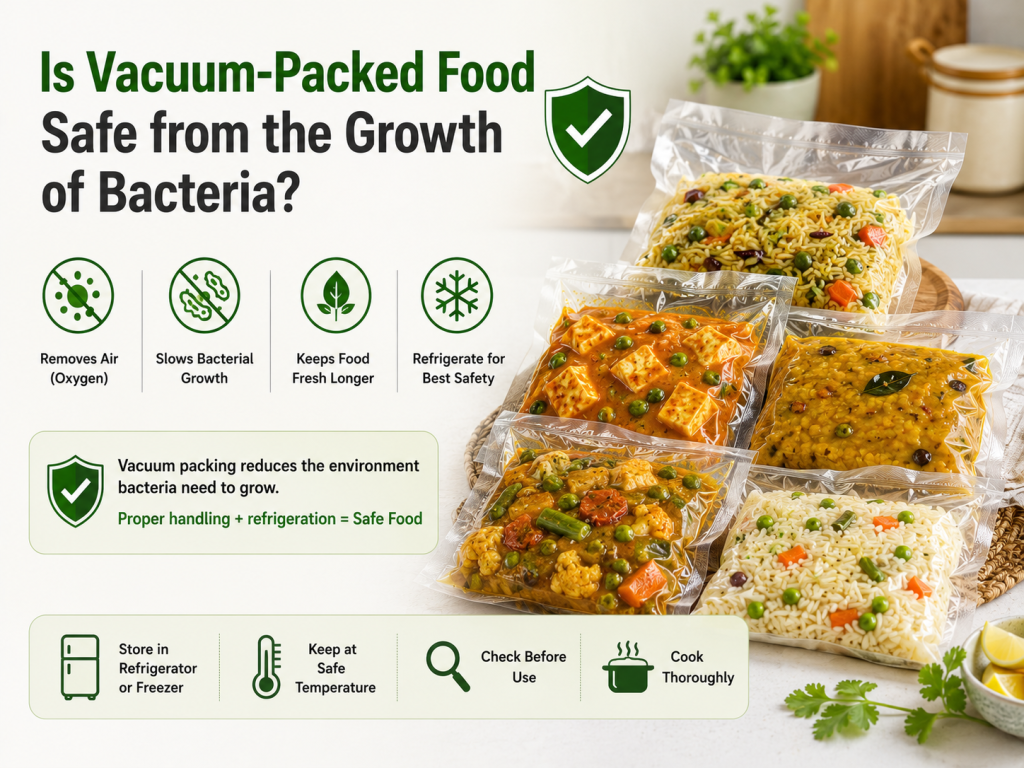
Is Vacuum-Packed Food Safe from the Growth of Bacteria?
Vacuum packaging significantly reduces the growth of many bacteria because most microorganisms require oxygen to multiply rapidly. However, vacuum sealing does not completely eliminate bacteria or sterilize food.
Some bacteria can survive and grow even in low-oxygen environments if the food is stored improperly. That is why proper refrigeration, freezing, or heat processing remains extremely important depending on the type of product.
Commercial vacuum-packed ready-to-eat foods are produced under carefully controlled manufacturing conditions, following strict food safety standards and quality checks. These processes help ensure that the food remains safe throughout its intended shelf life when stored according to the manufacturer’s instructions.
Consumers should always:
Check the expiry date before consuming.
Follow the recommended storage instructions.
Avoid using packages that are damaged, swollen, leaking, or have an unusual odor.
Refrigerate products after opening if instructed.
Consume opened food within the recommended timeframe.
When handled correctly, vacuum-packed foods are a safe, convenient, and dependable option for everyday meals, travel, and long-term storage.
Conclusion
Vacuum packaging has transformed the way we store and enjoy food by extending freshness, preserving taste, and reducing food waste. Whether you’re storing home-cooked meals, ready-to-eat dishes, vegetables, or dry pantry items, vacuum sealing offers a practical and efficient way to keep food in excellent condition for longer.
The exact shelf life depends on the type of food, storage temperature, packaging quality, and handling practices. While vacuum packaging slows spoilage by removing oxygen, it should always be combined with proper storage and food safety measures.
For busy professionals, students living away from home, families, and travelers, vacuum-packed meals provide the perfect balance of convenience, nutrition, and freshness. Choosing high-quality vacuum-packed products from trusted manufacturers ensures you enjoy safe, delicious meals whenever and wherever you need them.